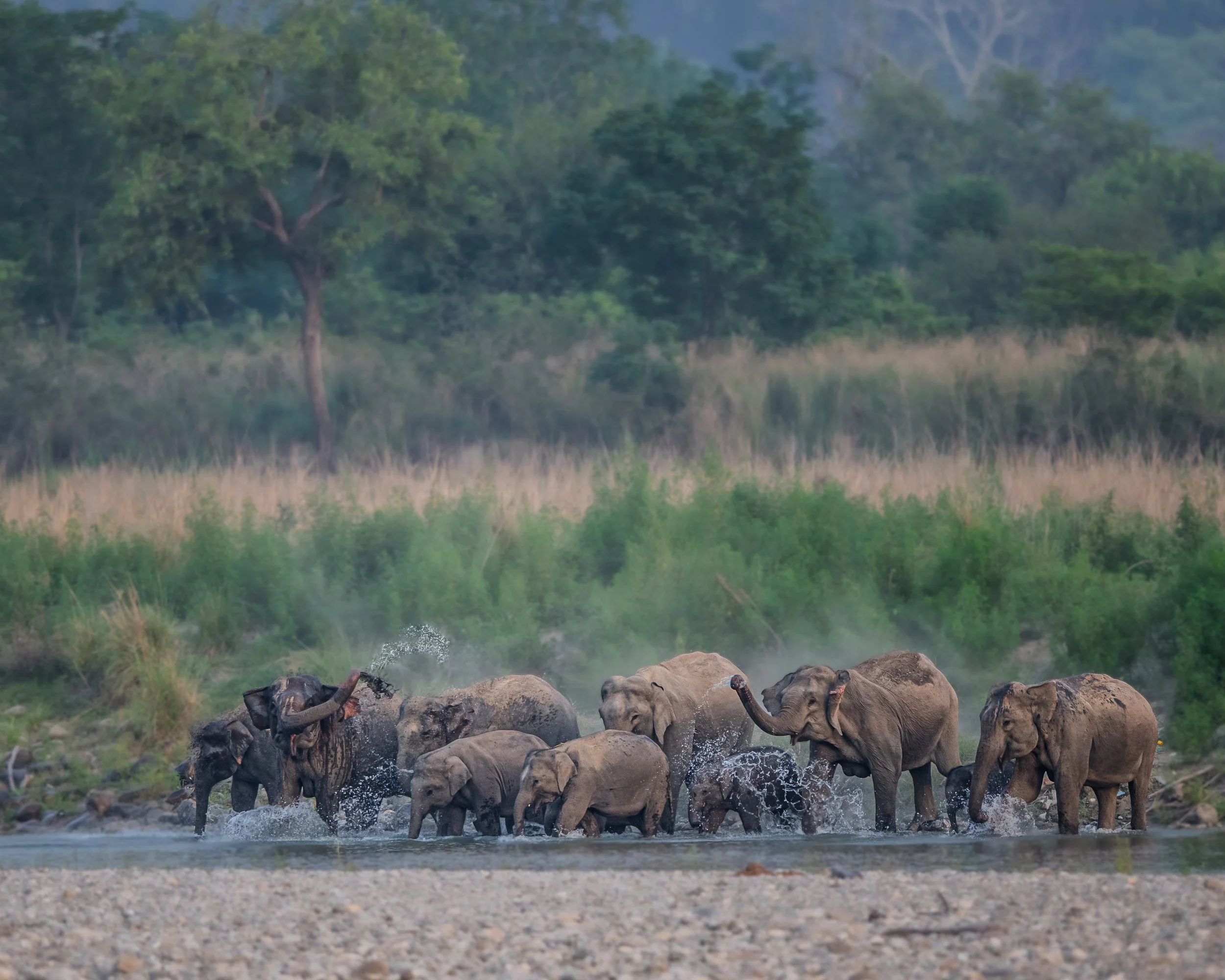
Jim Corbett National Park
India’s first national park, and still one of its most compelling tiger landscapes.
For many wildlife lovers, a visit to Corbett is not a one-time experience. It becomes an addiction.
Corbett does not always offer easy sightings. It demands patience, awareness and a willingness to read the forest. But that is precisely what gives it depth.
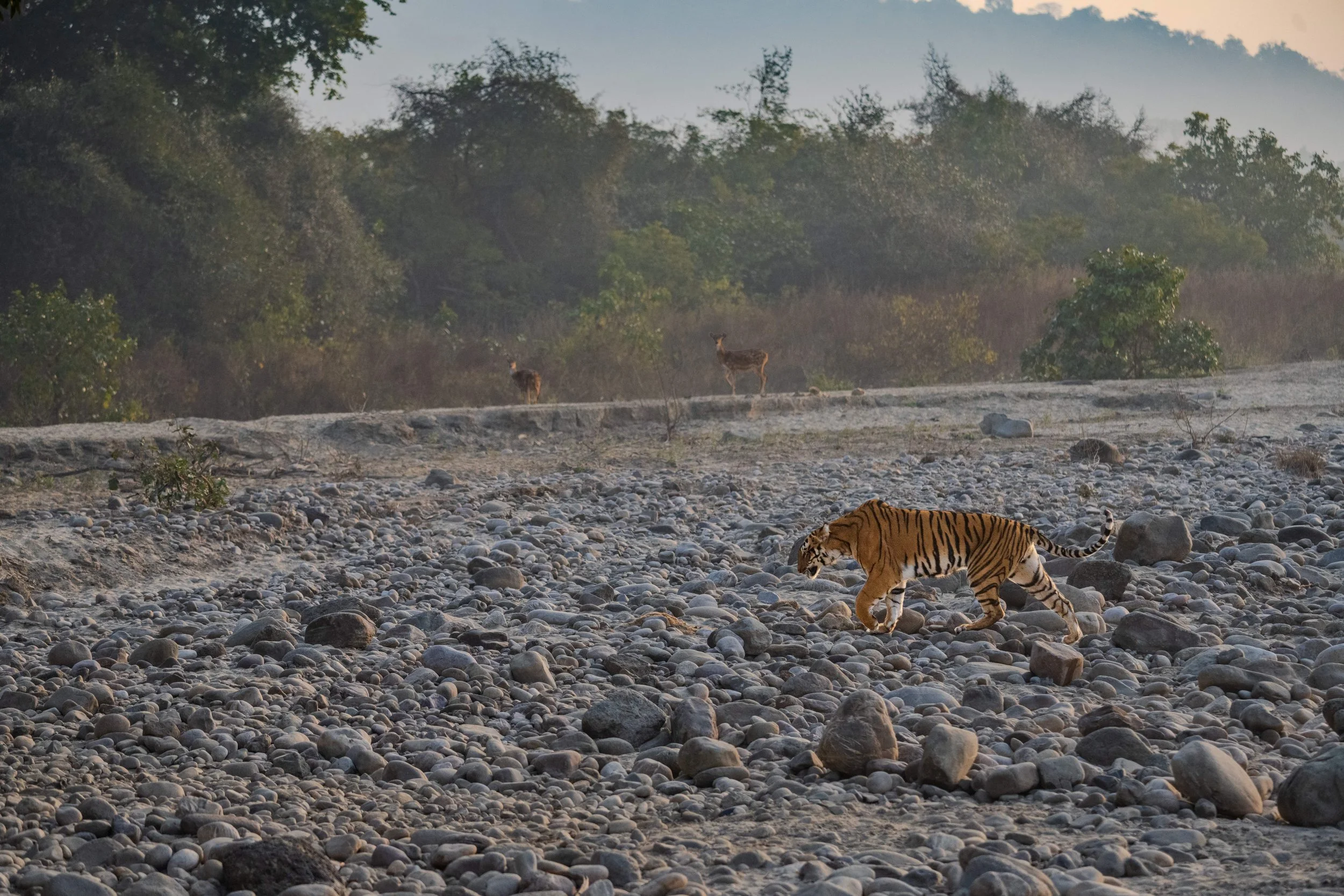
It is a landscape spectacular in it’s beauty - of golden light filtering through the trees, vast river valleys, towering sal forests and densely forested Shivalik hills. And is home to a huge diversity of wildlife, more than in most other tiger reserves in the country.
For those willing to return, it offers something that feels earned. And for photographers, it offers unparalleled frames.
And so, Corbett always draws you back. And that’s why a stay in Dhikala is the most difficult wildlife booking to get in India, such is the demand-supply mismatch.
Many travellers combine a stay at Tanhau with safaris into the park.

Bijrani Zone
Entry: Amdanda Gate
Safari Type: Jeep safaris (fixed morning & afternoon slots)
Open: 15th October to 30th June
Located close to Ramnagar, Bijrani is one of the most accessible and historically popular zones. The terrain alternates between dense forest and open grasslands with dry river beds.
Bijrani has two Forest Rest Houses inside where tourists can stay - Bijrani and Mailani.
Dhela Zone
Entry: Dhela Gate
Safari Type: Jeep safaris (fixed morning & afternoon slots)
Open: All year round
Dhela is among the newer eco-tourism zones and consists of mixed forest and open grassland patches. Though a smaller zone than some of the others, it supports a healthy population of elephants, deer and predators, and has grown in popularity over the years.
Jhirna has only one small Forest Rest House inside where tourists can stay.
Durgadevi & Mohan Zones
Entry: Durgadevi & Mohan Gates respectively
Safari Type: Jeep safaris (fixed morning & afternoon slots)
Open: 15h November to 15th June
This eastern side of Corbett is hillier and more rugged. The terrain includes mixed forest, river stretches and steeper landscapes. Both zones are extremely beautiful, but due to the terrain, lack of too any tracks and fewer open patches, are relatively lesser known for frequent wildlife sightings. However Durgadevi, especially in winter, is perhaps the best zone for birding enthusiasts.
The Mohan zone has opened recently but has a high density of tigers, so is showing promising signs of developing into an interesting zone.
Only Durgadevi has the Lohachaur Forest Rest House inside where tourists can stay.
Dhikala Zone
Entry: Dhangarhi Gate
Safari Type: Jeep safaris only for overnight stays in forest rest houses, else Canter safaris or day visitors
Open: 15th November to 15th June
Dhikala is the most iconic and expansive part of Corbett. Vast grasslands stretch along the stunning Ramganga reservoir, bordered by dense sal forests - classic tiger habitat and extremely rich in all animal and bird life.
This is the only zone where larger canter safaris (shared open buses) operate, for visitors making a day visit to the zone. Jeep safaris are only available for tourists staying overnight at one of the forest rest houses inside the zone.
Dhikala houses the well-known Forest Rest Houses of Dhikala, Gairal, Sarapduli, Sultan and Khinanauli, and lies at the park’s lowest altitude (around 385 metres).
Jhirna Zone
Entry: Dhela Gate
Safari Type: Jeep safaris (fixed morning & afternoon slots)
Open: All year round
Jhirna has a more scrub-dominated and dry deciduous landscape. It is one of the few zones that remains open throughout the year, including parts of the monsoon season when other zones close. Over the years, wildlife sightings in Jhirna have increased significantly, making it perhaps the most popular day safari zone presently. Other than regular tiger sightings, Jhirna offers the best chance of seeing a sloth bear in Corbett.
Jhirna has only one small Forest Rest House inside where tourists can stay.
Garjia Zone
Entry: Ringora Gate
Safari Type: Jeep safaris (fixed morning & afternoon slots)
Open: All year round
Garjia is also among the newer eco-tourism zones that has ben carved out of Bijrani zone. It consists of mixed forest and the Ringora grassland. It’s a smaller zone than some of the others, but supports a healthy population of wildlife and is good for birding as well.
Garjia does not have any Forest Rest House inside where tourists can stay.
Northern Ridge & Reserve Forest Areas
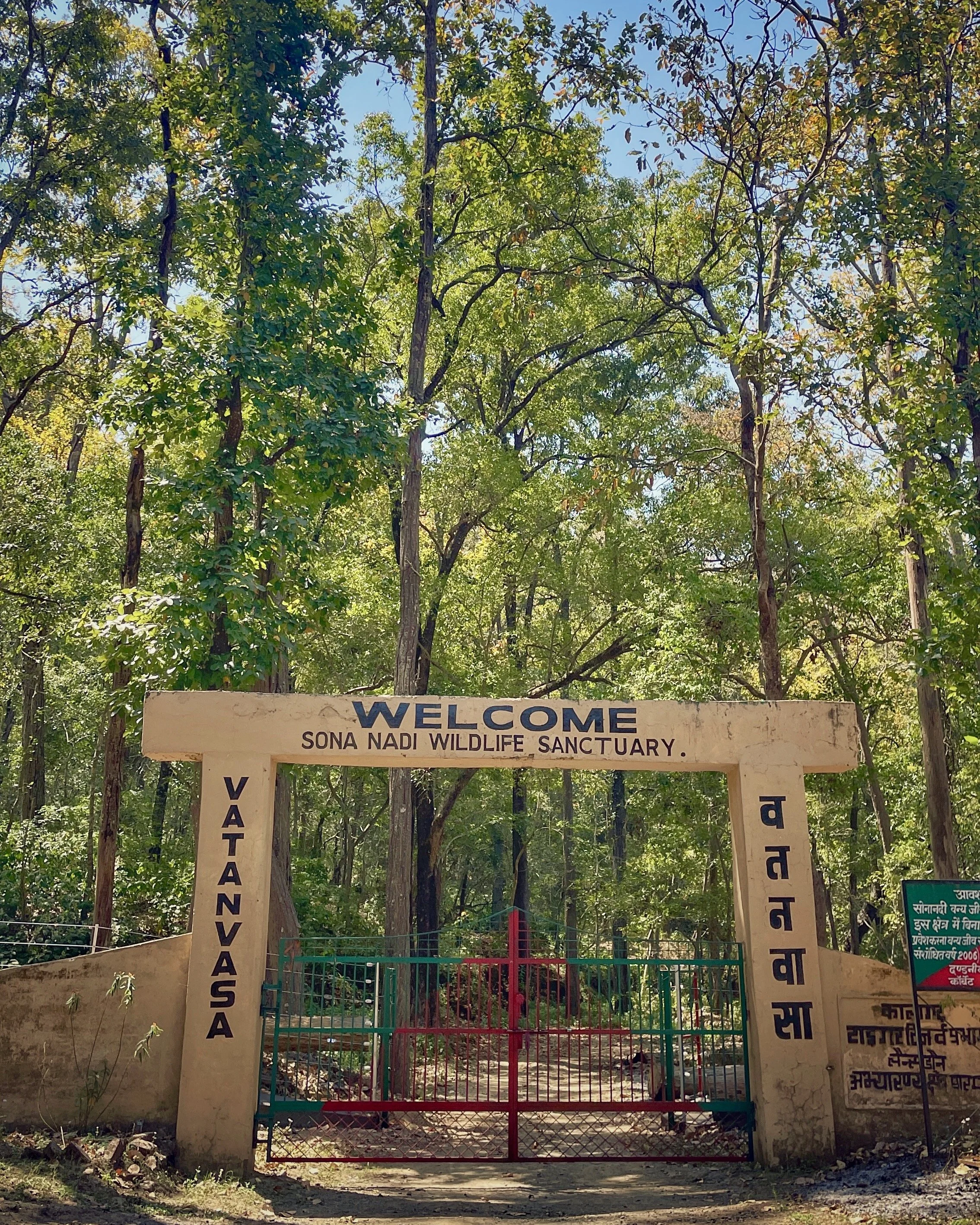
The highest ridge in Corbett includes Kanda Forest Rest House (1,085 metres above sea level). Beyond this lie lesser visited forest roads stretching between Vatanvasa Gate of the contiguous Sona Nadi Widlife Sanctuary in the west and Durgadevi Gate in the east.
These areas are quieter, forming critical buffer landscapes around the core park and having a huge amount of wildlife as well. However these are quite far away from mainstream Corbett, and less frequented by tourists.
Spread across this area are the forest rest houses of Halduparao, Mundiapani & Rathuadab.
A Note on Permits & Regulation
All safaris in Corbett operate under a permit system with fixed entry gates and defined routes. Every zone has a fixed number of vehicles that can enter for each safari. Therefore advance booking is essential, especially for the more popular zones and during peak season. Overnight stays in forest rest houses, especially in Dhikala, Bijrani and Jhirna zones are in huge demand and need to be booked as soon as bookings open, typically 45 days in advance.
Because the park is a protected tiger reserve, the structure is designed to balance tourism with conservation priorities.

Flora
Sal (Shorea robusta) dominates much of the lower forest and makes up about 40% of the forest.
At higher elevations, the vegetation becomes more diverse, including:
Chir pine (Pinus roxburghii)
Bakli (Anogeissus latifolia)
Anauri (Lagerstroemia parviflora)
Multiple bamboo species are found throughout the park.
One persistent ecological challenge is Lantana, an invasive weed that spreads aggressively across the forest floor and requires constant management.
Fauna
Among a huge variety of animals, birds and reptiles found in Corbett, the ones found commonly are:
Animals: Tigers, Elephants, Leopards/Panthers, Jungle cats, Leopard cats, Himalayan black bears, Sloth bears, Jackals, Martens, Civets, Mongooses, Otters, Hares, Porcupines, Chital (spotted deer), Sambar deer, Hog deer, Barking deer, Ghorals, Wild Boars, Macaques, Langurs and Blue Bulls (Nilgais).
Birds: Herons, Darters, Cormorants, Lapwings, Paradise Flycatchers, Munias, Weaver birds, Fishing eagles, Serpent eagles, Spotted Eagles, Black throated Payas, Mynas, Jungle Fowl, Vultures, Thrushes, Barbets, Peacocks, peahens, Kingfishers, migrant Gulls, Moorhens, Ducks, Geese, Sandpipers, Nightjars, Cuckoos, Woodpeckers, Wagtails, Black winged Kits, Drongos, Doves, Plovers, Black necked Storks, Parakeets, Owls, Kalij Pheasants, Grebes, Grey Lags, Snipes, Harriers, Ospreys, Minivets, Babblers, Hornbills, falcons and Stone Curlews. Corbett has more than 600 bird species officially recorded in it’s log books.
Fish: Goonch, Mahaseer, Trout and many other smaller species.
Reptiles: Gharials, Mugger Crocodiles, Monitor Lizards, turtles, Cobras, Pythons and the Sal forest Tortoise amongst many more
Landscape & Geography
Spread across approximately 1,300 square kilometres, Corbett lies between the Himalayan foothills in the north and the ancient Shivalik ranges in the south.
The park’s altitude ranges from 385 metres to 1,200 metres above sea level. This variation creates dramatic shifts in climate:
Winter temperatures can drop to 4°C at night
Summer highs may rise to 42°C
Annual rainfall averages between 1,400–2,800 mm, mostly during the monsoon (June–September)
The Ramganga River flows through the heart of the park, shaping its valleys, grasslands and riverine forests. Much of the forest is moist deciduous, dominated by sal (Shorea robusta), along with haldu, pipal, rohini and mango trees.
Project Tiger & Conservation Legacy
Corbett gained further prominence in 1973 with the launch of Project Tiger, India’s landmark wildlife conservation initiative.
The project was formally inaugurated at Dhikala Forest Rest House on April 1, 1973, with support from the World Wildlife Fund.
Since then, Corbett has remained one of India’s premier tiger reserves and continues to play a central role in conservation efforts across the country.
Zones & Safari Access Within Corbett
Corbett is not a single continuous landscape for visitors, but a network of designated tourism zones - each with its own habitat character, wildlife movement patterns and safari structure.
Wildlife, of course, moves freely across the entire tiger reserve.

A Brief History
Corbett holds the distinction of being India’s first national park.
In 1936, Sir Malcolm Hailey, then Governor of the United Provinces, declared 256 square kilometres as Hailey National Park. The park was later renamed Ramganga National Park in 1952, after the life-giving river that flows through it.
In 1957, it was renamed Corbett National Park in honour of Jim Corbett, the legendary hunter-turned-conservationist whose writings brought global attention to the forests and wildlife of this region.
His books, set largely in and around these forests, inspired generations of naturalists and conservationists.